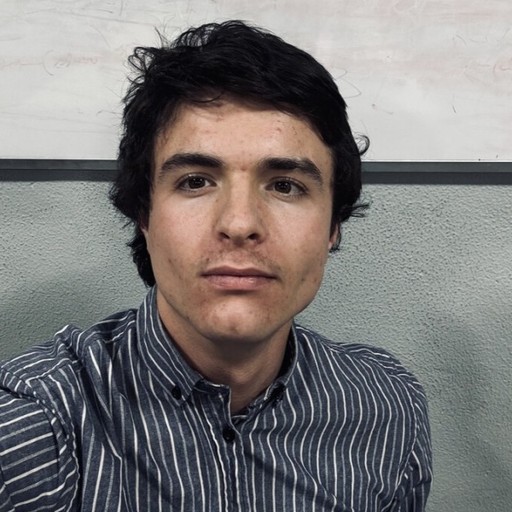
Live argument is becoming the credential.
AI will make essays easier to polish. That does not make thinking cheaper. The hard skill is answering a real person under time, in language they understand. Debate trains that directly.
Bet on your words
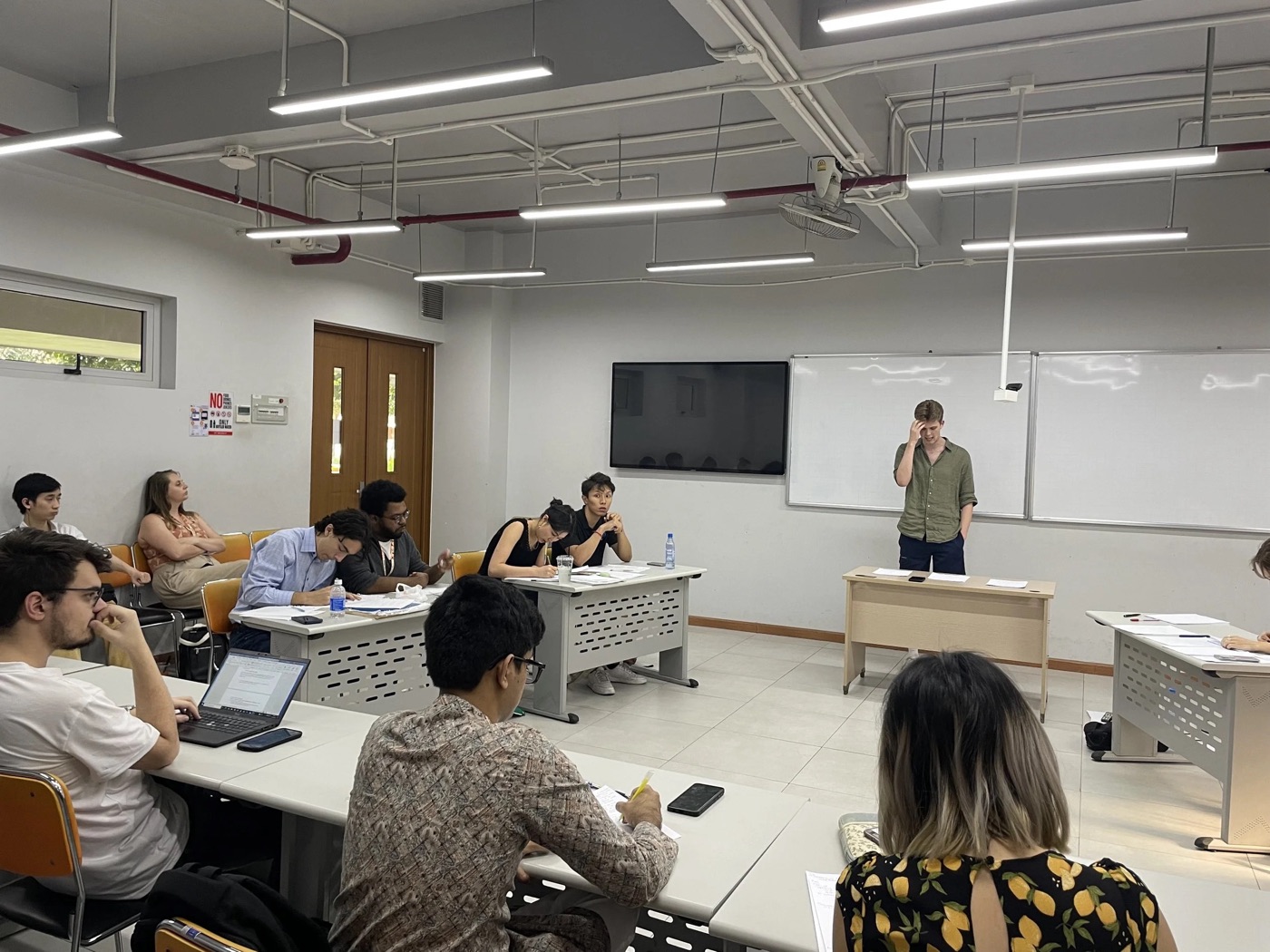 30 founding seats
Founding ambassadors start teams, run live rounds, onboard schools, and build a real resume as coaches and program founders. Paid, remote.
Pick how you start
Post a motion, take a challenge, and get an AI judge ballot when the round ends.
Speak against an AI that pushes back, tracks the clash, and writes your ballot.
Run rounds, onboard your school, and help the next program start. Paid, part-time.
Post a motion, accept a challenge, and get an AI judge ballot when the round ends.
Speak against an AI opponent in a timed voice round. It pushes back, tracks clash, and writes the ballot.
Founding student ambassadors run rounds, onboard schools, and help the next program start. Paid, part-time, 30 seats.
Debate AI opponents or real people in timed rounds and get an instant judge ballot when the round ends.
still building. updating website every day.
Founding story + community Debate itMatch with a real opponent on a real clock. The AI judge writes the ballot.
Argue out loud against an opponent that interrupts, takes POIs, and hits back.
Drop in a speech or case. Winner, speaker points, and a written RFD.
Build cases and rebuttals for any motion, in your format's structure.
Formats, drills, and vocabulary, from first round to circuit level.
Book a round for later, or watch one that is already running.
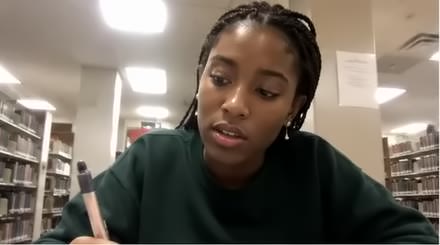


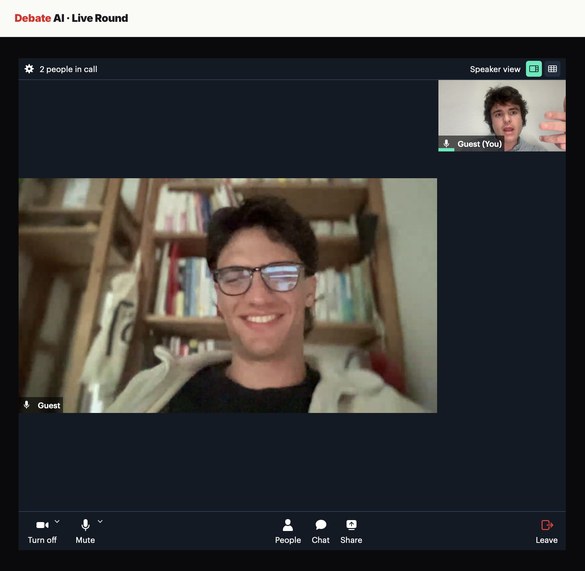
Portraits above are AI-generated to depict the look of a session. Many real debates have been held; they just weren't photographed.
Propose a time, RSVP, and meet in the queue. Cases, threads, and live chat in between. Free to browse.
Scheduled rounds
Propose a time. Show up.
Pick a format and a time. Anyone can tap I'm in.
See the schedule →The live room
Say what you actually think.
Live chat behind anonymous handles, and a queue of debaters ready to spar.
Step into the room →Cases and threads
Read real arguments. Argue back.
Real cases and round transcripts, with votes and threads.
Browse the corpus →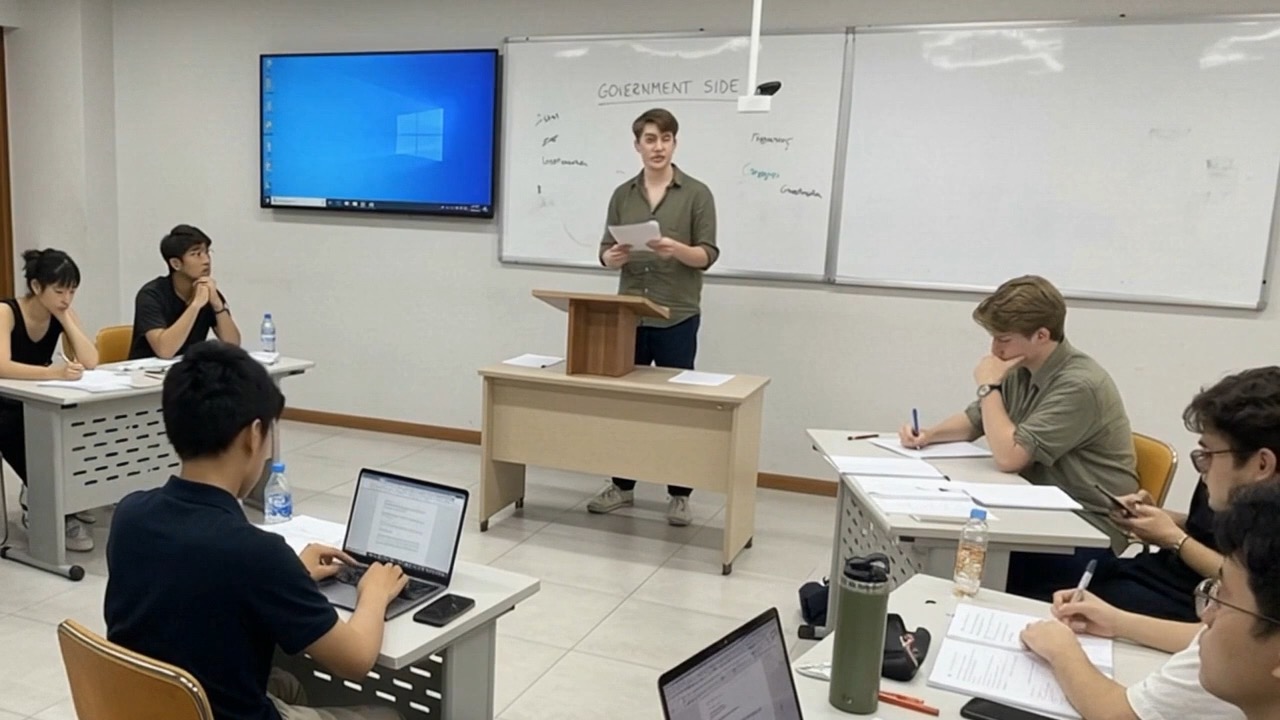
Rounds get scheduled, run livestreamed, and land on the cross-format leaderboard when the ballot comes back. Spectate the ones you're not in.
The leaderboard
Ranked across every format.
Live rounds and AI rounds both score. One board, every format, best entry per debater.
See the full leaderboard →Watch rounds
Spectate the next one live.
Scheduled debates run in open rooms. Join as a viewer while it happens, or open the round after.
Round updates
Know when the next one starts.
Register once and you get an email when rounds are scheduled and when they go live.
Register for round updates →Speaker points, winner, and the reason for decision.
The round turns on Pro's structural-harm framing against Con's network-value defense. Pro documents declining adolescent mental health, algorithmic misinformation, and attention moving away from local institutions. Con answers with crisis coordination, diaspora reach, and small-business access.
Pro wins on persistence: captured attention does not return to local institutions, and the mitigations Con relies on do not exist yet. Con's counterfactual-access argument keeps the margin narrow at 28 to 26.
A round against an opponent that fights back is watchable. Debaters stream their practice on Twitch, take motions from chat, and put the AI judge's ballot on screen for everyone to argue about.
Screen-share a voice round or a live human round. Chat picks the motion; you take a side.
The Twitch plugin reads your chat as the audience and writes a public ballot when the round ends.
Speaker points, winner, reason for decision. Half your chat will disagree. That is the content.
Streaming already, or want to build something together? Write to aidandavidhollinger@gmail.com.
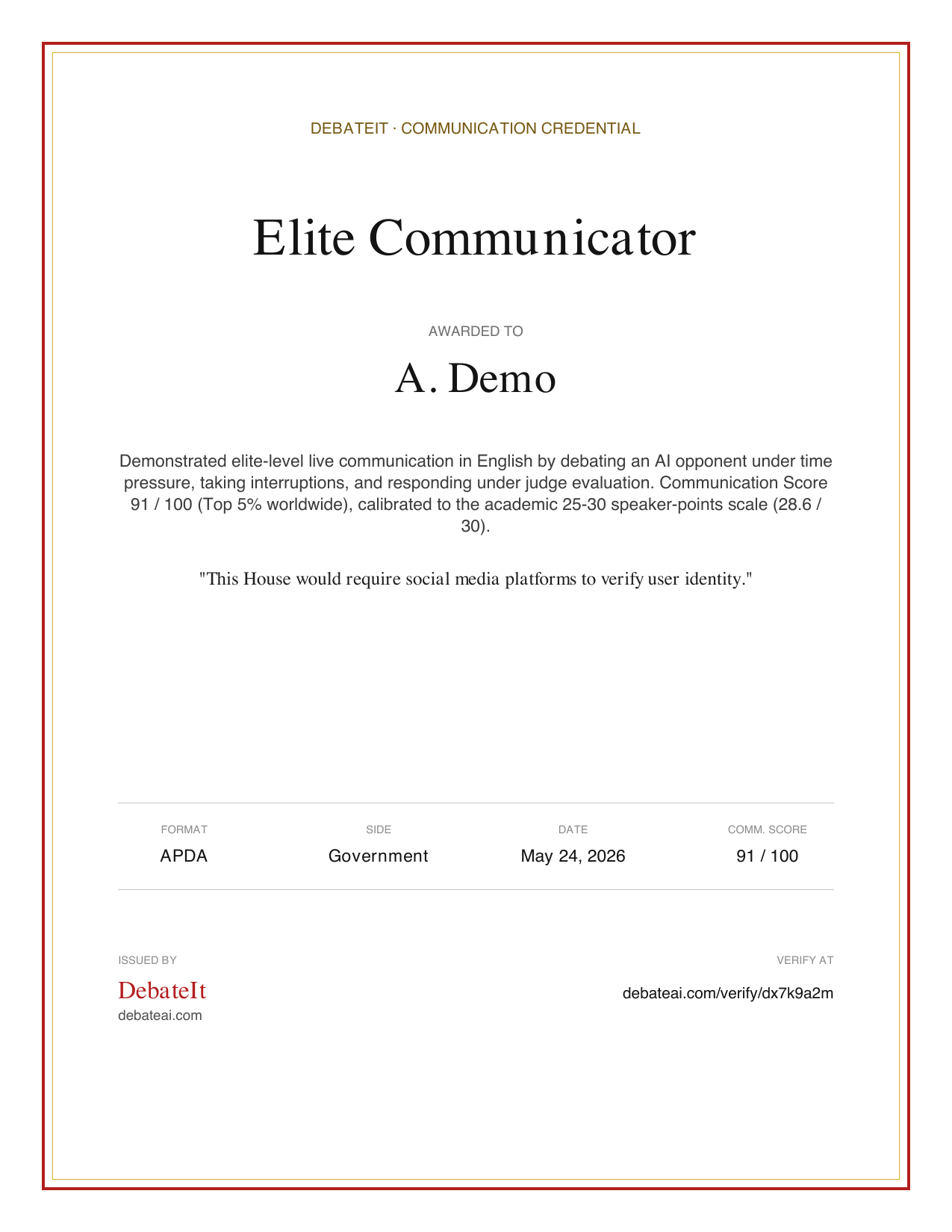
Debatable Certificates are free right now. A live voice assessment becomes a public Communication Score, percentile, and verify URL.
AI will make essays easier to polish. That does not make thinking cheaper. The hard skill is answering a real person under time, in language they understand. Debate trains that directly.
The real gap between circuits isn't talent, it's access to quality practice. Debatable closes it. The AI argues back at full strength, and the ballot tells you exactly where the round was won or lost.
Proof that AI can sharpen critical thinking rather than replace it. You can tell how much thought went into every layer, from case generation to the objectivity of the judging.
In four years of British Parliamentary, I'd never seen a tool able to summarize, refute, and analyze high-level argumentation until I used Debatable. It would have made a real difference in my prep for international majors.
In a world where we can outsource our thinking to AI, we need more tools to keep us sharp. Debatable is the chess.com of debate.
Short answers. If something's not here, the last one routes to a real inbox.
A sparring partner with a clock and an opinion. You pick a motion (the topic) and a side; the AI takes the other one and starts arguing.
You speak under a real clock. It interrupts mid-speech with POIs. You respond. When the round ends, an AI judge writes the verdict: who won, why, a score for each speech, one drill before next round.
Fifteen formats. Six brains. Fourteen languages. Built by a UChicago parliamentary debater. Free in beta.
Free in beta. 1 local preview without an account, 10 signed in with Google. No card collected. Hit the cap, wait for the reset. Nothing's for sale yet.
The numbers on /pricing are the post-beta plan, sitting there in public so you know what's coming. For school or team access, email aidandavidhollinger@gmail.com.
Hopefully not. That's exactly the line I'm trying to police.
It's built to argue back, not fabricate a universe. It presses soft claims, asks for warrants, finds the missing link, and tells you when your logic collapses. What it will never do is invent fake studies, fake cards, or fake tournament lore and pass them off as real.
No fake evidence. No fake citations.The harder problem is the opposite. AI can sound too complete: warranted enough to feel unfair, but missing the texture of a real round. More rounds, more ballots, more votes on what actually persuaded close that gap.
Still improving: human persuasion, strategic restraint, judge realism.You'll feel the gap in thirty seconds. Most hand you a wall of generic text. No clock, no format, no judge. Sounds like a debate the way a stock photo looks like a person.
This runs a live round. A motion, a side, a clock that doesn't pause. The AI takes POIs in WSDC, reads evidence at Policy speed, stays impromptu in APDA, then writes a real judge ballot. Built by a UChicago parliamentary debater who has actually argued in these formats.
None of this is perfect. It still says wrong things and drops threads. The round is better for it: you sharpen by catching the mistake. We ship fixes most weeks.
Yes, fourteen. English, Spanish, French, Portuguese, Mandarin, Arabic, Hindi, and more. Switch from the language pill; the AI argues, takes POIs, and writes the ballot in whichever you pick. Same engine across all fourteen, so you can drill in your first language and run it back in English once the arguments hold.
Quick Clash. Three-minute rounds, no format rules to memorize, nothing to study first. You take a side, the AI argues the other, the clock runs.
When that feels easy, /learn walks through each format (APDA, WSDC, BP, PF, LD, Policy, Congress, MUN) with the rules, sample topics, and how judges score it. Pick whichever your school runs.
No, not for one local preview. After that, sign in with Google to save rounds, keep your ballots across devices, and switch on the style-learning loop. The AI starts remembering how you actually argue and biases the next opponent against your habits.
Google only. No passwords, no magic links, no marketing list.
Asian Parliamentary, WSDC, British Parliamentary, APDA, Public Forum, Lincoln-Douglas, Policy, Student Congress, MUN. Plus Quick Clash for unstructured warmups.
Each format runs on its own prompt. WSDC and BP take POIs. LD goes framework-first. Policy spreads tagged cards. APDA stays impromptu with no fabricated citations. Congress runs floor speeches and questioning. The judge at round end scores the way a real judge in that format would.
No. Practicing against an AI in private is the same category as drilling with a teammate, taking a coaching call, or rewatching old tournament finals. Nobody at the tournament hears the AI; you take the round alone.
What WOULD be cheating: running the AI mid-round at a live competition, or submitting AI-generated case copy as your own original prep when the format requires original prep. Obviously don't.
A few more that come up:
Which AI brains run this? Six: Claude, GPT, Gemini, Grok, DeepSeek, Open Lab. Each has its own voice. DeepSeek is the technical scalpel, Open Lab is the character-rich one, Claude leans careful, Grok leans aggro. Toggle inside any feature.
What if the AI says something wrong? Push back. That IS the drill. Calling out a fake stat or a missing warrant is exactly what a strong debater does in round; you sharpen by taking the swing, not by hoping the opponent is right.
How long is a typical round? You pick. Quick Clash runs three minutes total. A full APDA round with all six speeches runs about 45 minutes; BP runs about 60. Stop mid-round and the AI flags it as practice, not a forfeit.
Does it work on my phone? Yes, any browser. For voice round on iOS, use headphones; the speaker can pick up its own output and confuse the turn detection.
Debate it vs. Debate Chat. What's the difference? Debate it is the timed voice round: full speeches, POIs, judge ballot. Debate Chat is text back-and-forth, no timer, faster iteration when you want to drill one clash without rebuilding the whole round.
Can the AI remember how I like to debate? Yes if you sign in. You are not training GPT or Claude. You are training Debatable's debate model: your style profile, the format rules, and the judge patterns that make each future opponent sharper for you. You stop having to keep restating "I'm varsity, don't dumb it down."
How does the judge ballot work? At round end you get the judge's full written reasoning (the RFD): winner, central clash, a score per speech, specific strengths, specific things to fix, one drill before next round. Want a second opinion? Switch the judging brain and read another verdict.
Bring my own API key? Yes, Anthropic only. The key lives in your browser's localStorage and never touches our servers. BYOK is for power users who'd rather route everything through their own Claude account.
What happens to my data? Saved rounds and cases sync to your account if signed in, local-only if anonymous. We don't sell data. If you opt in to the research corpus in your profile (off by default), anonymized rounds may be included in datasets we license to AI research orgs. Terms are in privacy §6. Otherwise everything stays inside Debate it. /privacy lists every sub-processor.
Can I run AI vs AI? Yes, on /exhibition. Set two brains against each other on the same motion. Useful for pre-round prep, useful for picking which brain to spar against next.
Live human-vs-human? Yes, on /spar. Match with another debater on the spot, run a timed round, AI judging at the end. Scheduled rounds live on /live. /leaderboard tracks the cross-format ranking.
Is this still being built? Yes, most weeks. /changelog has what shipped recently; most of it traces back to someone writing in.
Who built this? One person: a national parliamentary debater at UChicago.
Still nothing matches? Write aidandavidhollinger@gmail.com. Real inbox; usually a reply within a day.
Thirty minutes, on the record. Tell us what is working, what is broken, and what would make you stay.
Meet the six of usDrop your email once and you're registered for all of it: round updates when scheduled debates go live, product updates, team news, founding-class application openings, and tournament sign-ups.
Watch your inbox for round updates, application openings, and tournament invites.
It keeps a running memory of your skills, habits, and goals.
Your coach uses GPT Realtime for the live conversation. Its memory builds from your rounds and feedback, so each drill can start closer to where you left off.